
If you’re asking, Should I sell my yacht through a broker? You’re weighing control against expertise, savings against exposure, and effort against efficiency. This guide breaks down what really happens during a yacht sale, what brokers actually earn, who pays boat broker fees, and whether selling privately may or may not make sense.
Should I sell my yacht through a broker, or handle the yacht sale myself?
It’s a fair question, and it usually comes up when owners see the potential commission and wonder if they can save that money. According to market data, brokerage practices, and industry standards, selling a yacht is rarely a simple listing-and-handshake process.
A yacht sale involves valuation analysis, listing syndication across platforms such as boattraderonline and MLS systems, negotiations, escrow handling, contract drafting, sea trials, survey coordination, and title transfer.
According to the National Marine Manufacturers Association (NMMA), recreational boating contributes over $230 billion annually to the U.S. economy, which underscores how regulated and financially significant these transactions are. And that’s why it matters.
When you ask, should I sell my yacht through a broker, you’re really asking whether professional oversight reduces risk, shortens time on market, and improves final sale price.
What a Yacht Broker Actually Does for Sellers
Many people assume a boat broker simply lists boats for sale and waits for inquiries. In reality, working with a broker means structured representation. A yacht broker evaluates comparable sales data, reviews market absorption rates, studies brand demand, and sets a defensible asking price.
The Federal Trade Commission warns sellers in high-value asset markets about fraud and escrow scams. A reputable boat brokerage shields you from that exposure. Here’s how it works in practice.
A broker handles professional photography, detailed listing descriptions, and cross-platform distribution. They field inquiries, screen potential buyers, verify financial capability, coordinate sea trials, manage survey negotiations, and oversee closing documentation.
Without that infrastructure, selling a boat through a broker becomes a full-time responsibility. That’s why many owners who first attempt to sell privately eventually hire a broker after the process proves time-consuming.
Why Pricing Strategy Makes or Breaks a Yacht Sale
The question of whether I should sell my yacht through a broker often turns on commission. Yet pricing errors cost far more than commission ever will.
Boat depreciation curves show that recreational vessels can decline 10–15% annually, depending on type and market conditions. If you overprice, your yacht lingers. If you underprice, you leave money on the table.
A yacht broker studies comparable sold listings, not just active asking prices. That distinction matters. Active listings reflect hope; sold data reflects reality. Here’s a simplified comparison:
| Pricing Factor | Private Seller | Yacht Broker |
| Access to Sold Data | Limited | Full MLS access |
| Buyer Psychology Insight | Emotional | Market-based |
| Adjustment Strategy | Reactive | Strategic |
| Negotiation Buffer | Owner direct | Professional intermediary |
When you’re deciding whether to sell my yacht through a broker, accurate pricing alone can justify professional involvement.
Yacht Broker Fees, Commission, and Who Pays
Let’s address it directly. What is the average commission for selling a boat? Industry norms range from 5% to 10% of the sale price. Larger yachts may negotiate differently, while smaller vessels may lean toward standard percentages.
So who pays boat broker fees? In most transactions, the seller covers the yacht broker’s commission from the final sale proceeds. Here’s a transparent breakdown:
| Sale Price | 10% Commission (Sale price × 0.10) | 7% Commission(Sale price × 0.10) | Net to Seller (10%) |
| $500,000 | $50,000 | $35,000 | $450,000 |
| $1,000,000 | $100,000 | $70,000 | $900,000 |
| $2,000,000 | $200,000 | $140,000 | $1,800,000 |
The better question is whether professional representation increases the final sale price enough to offset boat broker fees. In many competitive Florida markets, exposure and negotiation leverage can push offers higher than private sellers expect.
If you’re wondering how much a boat broker charges vs what they deliver, the difference lies in expertise, marketing reach, and deal management.
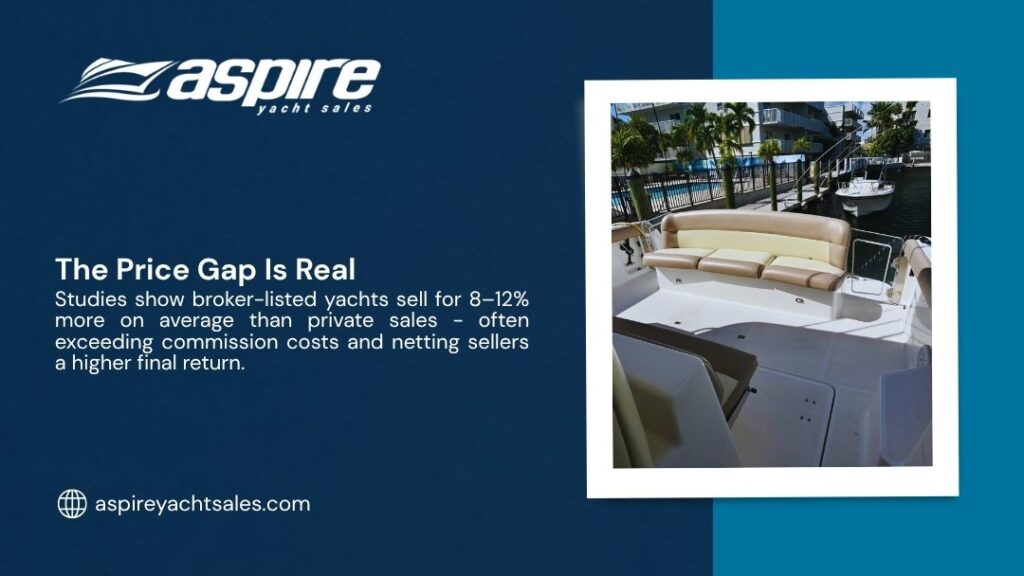
Selling Private vs Selling Through a Broker
Some owners prefer control. Others prefer insulation from negotiation stress. The contrast is practical.
| Variable | Sell Yourself | Selling a Boat Through a Broker |
| Marketing Reach | Limited to listing sites | MLS, brokerage networks |
| Buyer Screening | Owner responsibility | Broker verifies capability |
| Sea Trials | Owner arranges | Broker coordinates |
| Paperwork | Self-managed | Escrow + documentation oversight |
| Risk Exposure | Higher | Mitigated |
Selling privately might work if you already have a confirmed buyer. But when competing against dozens of similar boats for sale, professional positioning often matters.
Time on Market and Buyer Access (Sell Private vs. Broker)
Exposure determines momentum. In competitive coastal markets, the difference between broad distribution and limited visibility can shape how long a yacht sits unsold. Owners who attempt to sell privately often discover that inquiries arrive slowly and qualification becomes their responsibility. A broker, by contrast, activates an established buyer network and cooperative listing systems.
| Factor | Private Sale | Broker Representation |
| Listing Reach | Single or limited platforms | MLS distribution + brokerage networks |
| Buyer Qualification | The owner must screen | Financially vetted prospects |
| Inquiry Volume | Typically lower | Higher due to syndication |
| Time Investment | Owner-managed scheduling | Broker-managed coordination |
| Average Time on Market | Often longer without pricing data | Generally shorter with market positioning |
When evaluating whether to sell privately or through a broker, time carries financial weight. Extended listing periods can trigger price reductions and buyer hesitation, especially in high-inventory regions.
Negotiation and Emotional Distance
Negotiation in a yacht transaction rarely unfolds in a straight line. Survey reports lead to repair requests. Sea trials surface performance questions. Offers arrive below expectations. Counteroffers follow. This back-and-forth can strain even experienced owners.
Emotional attachment complicates matters. An owner remembers upgrades, maintenance, and memories. A buyer looks strictly at condition, comparables, and leverage. That disconnect can stall progress.
A seasoned yacht broker absorbs that friction. By acting as an intermediary, the broker structures proposals, counters strategically, and protects the sale price while preserving goodwill. Emotional neutrality prevents impulsive concessions and helps maintain momentum during survey renegotiations.
In many cases, working with a broker improves outcomes not because of persuasion tactics, but because professional distance preserves discipline.
Legal Documentation and Closing Risk
Marine transactions involve layered documentation. Title status, lien searches, escrow arrangements, and registration transfers must align precisely. Missteps create delays or expose both parties to dispute. The following comparison outlines procedural risk exposure.
| Documentation Element | Private Sale Risk Level | Broker-Managed Risk Level |
| Title & Lien Verification | Moderate to High | Low with documentation checks |
| Escrow Handling | Owner-managed | Third-party escrow coordination |
| Bill of Sale Accuracy | Prone to error | Standardized contracts |
| Survey & Sea Trial Addendums | Informal revisions | Structured amendments |
| Closing Timeline | Variable | Coordinated closing schedule |
Proper oversight safeguards the transfer of ownership and ensures compliance with Coast Guard documentation or state registration requirements. Structured transaction management reduces the chance of administrative disputes.
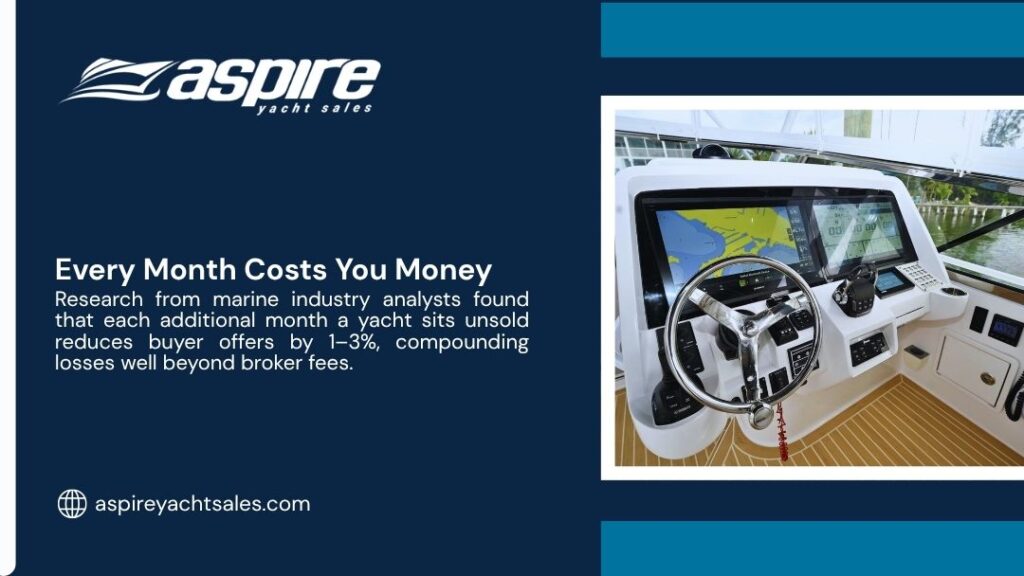
When Selling Privately May Make Sense
There are circumstances where selling independently is reasonable. If the vessel value is modest and the buyer is already identified, direct negotiation may be efficient. Owners with prior brokerage experience or strong familiarity with documentation procedures may feel comfortable managing escrow and contracts.
A private transaction can also make sense when the yacht appeals to a narrow niche audience already connected through community networks. In such cases, marketing reach may not be the determining factor.
However, sellers must realistically assess time commitment. Coordinating inquiries, arranging showings, reviewing survey findings, and drafting agreements require attention and composure. For some owners, independence works. For others, the workload outweighs perceived commission savings.
How to Choose the Right Yacht Broker
Selecting representation requires scrutiny. Not every brokerage operates with the same discipline.
Begin by reviewing recent transactions. A broker who demonstrates active sales within your vessel category likely understands buyer demand. Ask direct questions about pricing strategy. How are comparable sales evaluated? What adjustments are made for refits or upgrades?
The marketing approach also deserves examination. Does the brokerage rely solely on passive listing platforms, or does it leverage cooperative MLS systems and industry networks? Exposure strategy influences buyer access.
Evaluate communication style. A broker should provide transparent feedback, not inflated valuation promises designed to secure a listing. Integrity and realism signal professionalism.
Finally, confirm administrative support. Effective brokers coordinate surveys, escrow, and closing agents with structured timelines. Transaction management capacity often separates advisory-level representation from simple listing services.
Market Conditions in Florida and Puerto Rico
Regional dynamics influence selling strategy. Florida remains one of the most active yacht markets in the United States, particularly in Fort Lauderdale, Miami, Palm Beach, and Naples. Puerto Rico, while smaller, serves as a strategic gateway for Caribbean cruising vessels. Market activity levels differ by season and inventory density.
| Market Factor | Florida Coastal Cities | Puerto Rico |
| Inventory Volume | High concentration | Moderate supply |
| Buyer Traffic | Strong domestic + international | Caribbean-focused buyers |
| Seasonal Demand | Peaks late winter through early summer | Influenced by the Caribbean cruising season |
| Pricing Competition | Competitive due to volume | Less saturated but selective |
| Broker Network Density | Extensive brokerage presence | Smaller but specialized networks |
High inventory regions often require sharper pricing and stronger marketing differentiation. In emerging or seasonal markets, timing can influence buyer engagement.
Understanding local absorption rates, buyer demographics, and seasonal shifts provides clarity before listing. Market awareness shapes whether private selling or broker representation aligns with prevailing conditions.
Conclusion
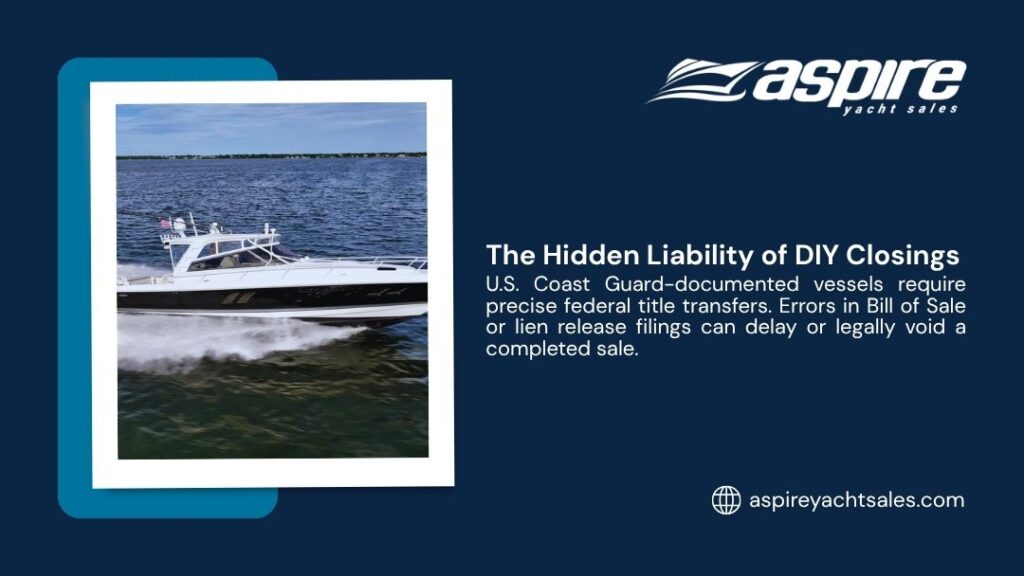
So, should I sell my yacht through a broker? If your yacht represents a significant asset, if you want to protect your sale price, minimize legal exposure, and avoid time-consuming buyer management, professional representation often pays for itself. Yacht broker commission reflects structured oversight, exposure, leverage, negotiation experience, and transaction management.
If you already have a confirmed buyer and understand marine documentation thoroughly, a private sale might work for you. But most high-value yacht transactions benefit from professional coordination.
For owners who want informed guidance, structured marketing, and disciplined negotiation, you can review Aspire Yacht Sales and request a valuation consultation directly or call their Fort Lauderdale office to discuss your specific vessel.
Selling a yacht is rarely casual. Whether you choose independence or expertise, make that choice with clarity, not guesswork. And that’s what truly determines whether you should sell your yacht through a broker.