
Selling a yacht isn’t like selling patio furniture. It’s a high-value asset tied to federal rules, state laws, tax reporting, and sometimes marine finance. If you’re asking, what paperwork do I need to sell a yacht, you’re already thinking the right way. The paperwork protects you, protects the buyer, and prevents legal issues long after the wake settles. Here’s what matters, how it works, and where most sellers get tripped up.
What paperwork do I need to sell a yacht?
If you want to know the answer to what paperwork do I need to sell a yacht, it starts with proof of ownership and ends with a properly executed transfer. Everything in between depends on whether your vessel is state-titled or federally documented with the Coast Guard.
At a minimum, most yacht transactions require a valid title or federal documentation, a properly drafted bill of sale, lien releases if applicable, registration transfer paperwork, and written confirmation that the seller’s interest has been removed from the public record. That’s the foundation of selling a yacht legally in the United States.
According to the U.S. Coast Guard National Vessel Documentation Center, federally documented vessels must record ownership transfers through official documentation filings, not just a private contract. If you skip that step, ownership technically never changes in federal records. Here’s how the paperwork typically breaks down.
Core Ownership Documents
When people ask what paperwork is needed to sell a boat or yacht, they often mean the title. But here’s the thing, not every yacht has one. Smaller vessels are usually state-titled. Larger yachts are often federally documented. The paperwork differs.
| Document | State-Titled Yacht | USCG Documented Yacht | Why It Matters |
| Certificate of Title | Required | Not issued | Shows legal ownership |
| USCG Certificate of Documentation | Not applicable | Required | Federal proof of ownership |
| Bill of Sale | Required | Required | Records transaction details |
| Abstract of Title | Rare | Often requested | Reveals lien history |
| Lien Release (if financed) | Required if a loan exists | Required if the mortgage is recorded | Clears debt before transfer |
A properly executed bill of sale is critical in either case. If you’re wondering how to make a bill of sale for a boat, it must include the hull identification number (HIN), vessel name, registration or documentation number, purchase price, buyer and seller details, and date of transfer. In documented yacht sales, the Coast Guard provides a specific form (CG-1340) that must be filed. Without these documents, you don’t technically sell a yacht; you just shake hands.
Do You Need a Title to Sell a Boat?
A common question tied to what paperwork do I need to sell a yacht is whether a title is mandatory. The answer depends on your vessel’s registration status. State-titled boats absolutely require an endorsed title transfer. If you’ve lost it, you’ll need a duplicate from your state’s agency before you can proceed.
Federally documented yachts do not use state titles. Instead, ownership transfers through the Coast Guard’s documentation system. In that case, you’ll need the original Certificate of Documentation and properly filed transfer forms. Skipping documentation can lead to future disputes over proof of ownership, and that’s where legal issues begin.
Selling a Yacht With a Loan or Lien
Now we reach the uncomfortable part. Many owners asking how to sell a boat with a loan or how to sell a boat with a lien don’t realize that lenders often hold recorded security interests against the vessel.
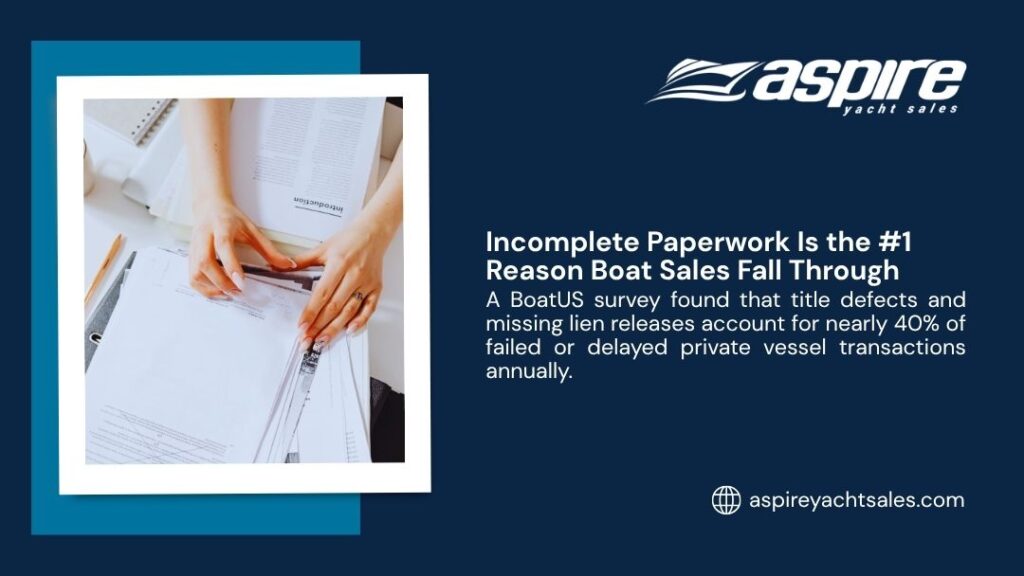
If you’re selling a boat with a loan, the lender must issue a written lien satisfaction or mortgage release. Until that happens, the buyer cannot obtain a clear title. For documented vessels, a preferred ship mortgage is recorded with the Coast Guard. That release must also be recorded.
According to the U.S. Maritime Administration, preferred ship mortgages carry federal standing and remain enforceable until officially discharged. So if you plan to sell a yacht that is financed, coordinate payoff timing carefully. In many transactions, funds move through escrow to ensure the lender gets paid and releases the lien simultaneously. That’s how you avoid a stalled closing.
Registration Transfer and State Notifications
Even after the sale closes, paperwork continues. States require sellers to file a Notice of Sale or Release of Liability. This protects you if the new owner racks up fines or causes damage. For example, the Florida Highway Safety and Motor Vehicles Department requires vessel sellers to complete notice documentation within 30 days.
If you’re researching how to sell a boat in Washington State or how to sell a boat in Massachusetts, each state has its own vessel transfer forms and tax reporting requirements. Selling a boat in Washington State, for instance, involves excise tax considerations and Department of Licensing filings.
This is where many private sellers stumble. They assume the bill of sale alone handles everything. It doesn’t.
Maintenance Records and Supporting Documents
While not always legally required, providing maintenance records can dramatically smooth the process. Buyers expect transparency. A well-organized file showing service history, engine hours, equipment upgrades, and previous surveys builds confidence. Here’s how supporting documentation influences a sale.
| Supporting Record | Legal Requirement | Buyer Impact |
| Engine service logs | No | Increases buyer trust |
| Survey reports | No (unless lender required) | Supports valuation |
| Warranty documents | No | Clarifies transferable coverage |
| Manuals & equipment lists | No | Helps smooth transition |
This can help you if you’re aiming to get the best price. Organized documentation often shortens negotiation time and reduces last-minute disputes. If you’re unsure where your yacht stands in the current market, you can review a professional valuation, which gives clarity before paperwork even begins.
Insurance, Coast Guard Numbers, and Post-Closing Steps
After ownership transfers, cancel or transfer insurance coverage immediately. Leaving a policy active after the sale can create liability confusion.
For documented yachts, the Coast Guard documentation number remains with the vessel. However, the owner’s name must be updated in federal records.
If your yacht carries an MMSI number, update those emergency contacts with NOAA. Failing to update this data can delay rescue coordination in emergencies. These aren’t flashy details, but they matter.
Selling Privately vs Using a Broker
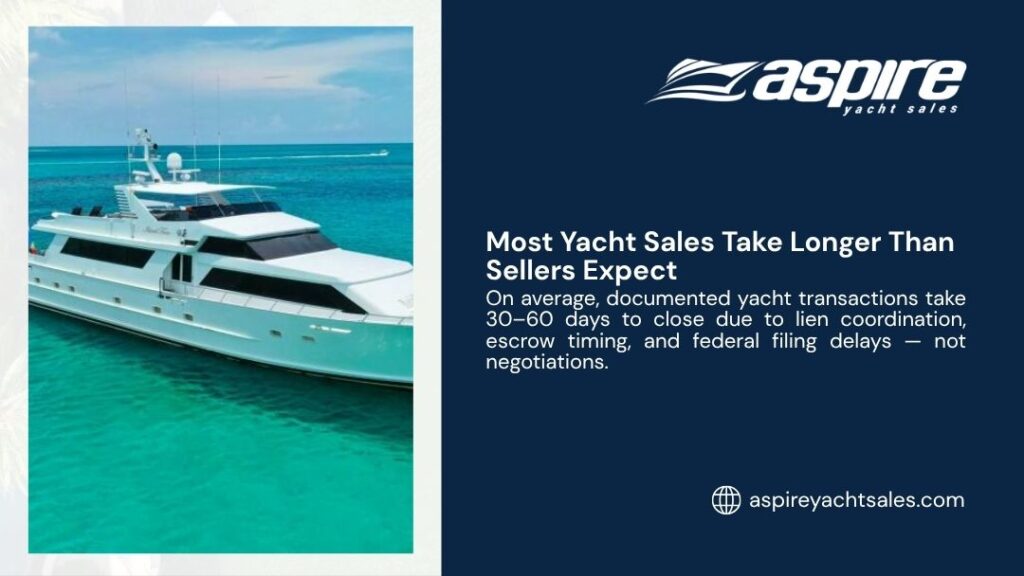
Technically, you can handle all paperwork yourself. Many sellers researching how to sell their yacht consider that route first. Paperwork errors delay funding. A missing lien release stalls closing. A registration form gets rejected over a mismatched HIN. Weeks pass.
That’s why many experienced owners explore whether they should sell through a professional advisor. A boutique brokerage such as Aspire Yacht Sales handles contract drafting, escrow coordination, documentation review, and compliance checks from start to finish. If you’re weighing the option, you can explore professional seller representation.
In complex transactions, especially those involving marine finance or documented yachts, oversight reduces risk.

How to Sell a Yacht the Right Way
If you’re still asking what paperwork I need to sell a yacht, here’s how it works in practice. First, confirm your ownership status, state title, or federal documentation. Second, verify whether any loan or lien remains. Third, prepare a compliant bill of sale. Fourth, coordinate closing funds and releases through escrow. Fifth, file all transfer documents with the appropriate agency. Finally, cancel insurance and update safety registrations.
It sounds straightforward on paper. In reality, timing and accuracy matter. According to the National Marine Manufacturers Association, the recreational boating industry generates over $230 billion in annual economic impact. That scale alone explains why regulatory oversight exists. Vessel transactions aren’t casual exchanges; they’re regulated asset transfers. And that’s why paperwork cannot be an afterthought.
Closing the Loop the Right Way
So, what paperwork do I need to sell a yacht? You need documented proof of ownership, a compliant bill of sale, lien releases where applicable, official transfer filings, and confirmation that your legal interest has ended. Everything else, maintenance records, survey reports, and organized documentation, strengthens the transaction.
Selling a yacht is rarely a one-page transaction. It involves state agencies, federal systems, lenders, insurers, and sometimes escrow services. Handle it carefully, or get experienced help. If you want clarity before listing, connect directly with Aspire Yacht Sales or speak with a licensed captain-broker to ensure your documentation is in order before negotiations begin. Because when it comes to high-value assets on the water, paperwork isn’t red tape. It’s protection.